LEGAL NEWS BULLETIN KEY POINTS OF THE LAW ON INVESTMENT 2025

LEGAL NEWS BULLETIN KEY POINTS OF THE LAW ON INVESTMENT 2025

LEGAL NEWS BULLETIN KEY POINTS OF THE LAW ON INVESTMENT 2025

A. GENERAL INFORMATION

  • Date of promulgation: 11/12/2025.
  • Effective date: From 01/03/2026. Article 7 and Appendix IV shall take effect from 01/07/2026; Clause 3 Article 50 shall take effect from 01/01/2026.
  • Scope of regulation: Regulating investment and business activities in Vietnam and outward investment activities from Vietnam to foreign countries.
  • Transitional provisions: Investors that were granted Investment Licenses, Investment Incentive Certificates, Investment Certificates, Investment Registration Certificates, or written decisions or approvals of investment policy prior to the effective date of this Law shall continue to implement their projects in accordance with the issued documents.

B. KEY ISSUES TO NOTE

1. Addition of prohibited investment and business sectors

  • Key updates: Additional prohibited sectors include trading in national treasures; export of relics and antiques; e-cigarettes and heated tobacco products. This is a completely new provision compared to the Law on Investment 2020. For the first time, these business activities are officially added to the list of prohibited investment and business sectors.
  • Legal basis: Clause 1 Article 6 of the Law on Investment 2025[1].

2. Reduction and transformation of management methods for conditional investment and business sectors

  • Key updates: Abolition of 38 sectors and amendment of the regulatory scope of 20 conditional investment and business sectors. A strong shift from “pre-licensing” (granting permits and certificates) to “post-licensing supervision” (publicizing requirements and business conditions).
  • Legal basis: Article 7 and Appendix IV of the Law on Investment 2025[2].

3. Amendments and supplements to forms of investment support and investment incentives

  • Key updates: Addition of new forms of investment support such as green transition and digital transformation, and the introduction of an open framework for investment support, while clarifying the authority of state agencies. The method of identifying incentivized sectors is changed from a listing approach to a development-oriented approach, expanding to new sectors such as semiconductors and the digital economy. At the same time, special investment incentives are made more flexible by abolishing rigid criteria and assigning the Government to provide detailed regulations, and expanding the scope of application to strategic technology sectors.
  • Legal basis: Articles 14, 15 and 17 of the Law on Investment 2025[3].

4. Establishment of economic organizations by foreign investors

  • Key updates: Foreign investors are permitted to establish economic organizations to implement investment projects before carrying out procedures for the issuance or adjustment of Investment Registration Certificates. Under the previous law, foreign investors were required to have a project before establishing an enterprise.
  • Legal basis: Clause 2 Article 19 of the Law on Investment 2025[4].

5. Additional provisions on cases where foreign investors must carry out registration procedures for capital contribution, share purchase, or capital contribution purchase upon changes in members or shareholders

  • Key updates: Additional provisions on cases where foreign investors must conduct registration procedures prior to capital contribution, share purchase, or capital contribution purchase, including: cases of increasing ownership ratio in conditional sectors; cases of exceeding or increasing ownership above 50% of charter capital; and cases where economic organizations hold land use rights in sensitive areas related to national defense and security such as border areas, coastal areas, and islands.
  • Legal basis: Clause 3 Article 21 of the Law on Investment 2025[5].

6. Clarification and narrowing of projects subject to investment policy approval

  • Key updates: Detailed provisions on 20 specific types of projects subject to investment policy approval, while clearly excluding certain projects that are not required to carry out this procedure (such as auctioned mineral exploitation projects and industrial cluster infrastructure projects). The authority for approval is also strongly decentralized to the Prime Minister and Chairpersons of provincial People’s Committees.
  • Legal basis: Articles 24 and 25 of the Law on Investment 2025[6].

7. Removal of two cases requiring adjustment of investment projects

  • Key updates: The Law retains only five cases in which investors are required to carry out procedures for approval of adjustment of investment policy. Two cases have been abolished compared to the Law on Investment 2020, including: (i) changes in total investment capital of 20% or more resulting in changes in project scale; and (ii) changes to technologies that have been appraised.
  • Legal basis: Clause 3 Article 33 of the Law on Investment 2025[7].

8. Allowing flexibility in adjusting the duration of investment projects

  • Key updates: During project implementation, investors are allowed to proactively increase or decrease the duration of investment projects, provided that the adjusted duration does not exceed the prescribed limits (50 years or 70 years depending on the area). Compared to the Law on Investment 2020, this is significantly more flexible, as previously extensions were only allowed when the project duration was about to expire.
  • Legal basis: Clause 4 Article 31 of the Law on Investment 2025[8].

9. Expansion of the right to apply special investment procesures

  • Key updates: Investors in industrial zones, export processing zones, high-tech zones, concentrated digital technology zones, free trade zones, and international financial centers have the right to opt for special investment procedures. Projects under this mechanism are not required to obtain investment policy approval, environmental impact assessment reports, detailed planning, construction permits, or fire prevention and fighting approvals, and are instead implemented based on a commitment mechanism to satisfy conditions.
  • Legal basis: Article 28 of the Law on Investment 2025[9].

10. Simplification of outward investment procedures

  • Key updates: Abolition of the requirement for approval of outward investment policy (previously under the authority of the National Assembly and the Prime Minister). Instead, only the procedure for issuance of an Outward Investment Registration Certificate by the Ministry of Finance is required for applicable projects; in cases of large-scale projects or those with special mechanisms, a report must be submitted to the Prime Minister for consideration before issuance. At the same time, detailed provisions on the implementation of outward investment activities (such as opening capital accounts, transferring capital, using and remitting profits) are converted into framework regulations, with detailed guidance assigned to the Government, in order to enhance flexibility.
  • Legal basis: Articles 41, 42 and 43 of the Law on Investment 2025[10].

11. Changes in regulations applicable to the transfer of investment projects

  • Key updates: Regulations on the transfer of investment projects under investment law are expanded to apply to all projects that have been decided on investment policy, approved for investment policy (or adjusted), or granted or adjusted Investment Registration Certificates. Previously, the Law on Real Estate Business applied more narrowly.
  • Legal basis: Clause 7 Article 51 of the Law on Investment 2025[11].

[1] Article 6. Banned business lines

1. The business investment activities below are banned: i) Trade in national treasures; k) Trade in and export of relics and antiques; l) Trade in electronic cigarettes and heated tobacco products.”.

[2] Article 7. Conditional business lines

1. Conditional business line means a business line in the territory of Vietnam in which the business investment must satisfy necessary conditions for reasons of national defense and security, social order and security, social ethics, or the health of the community. The List of conditional business lines is specified in Appendix IV to this Law.

The Government shall introduce a List of conditional business lines requiring licensing and certification before commencing investment and business activities, and a List of conditional business lines requiring a shift in the business condition management method from licensing and certification to declaration of fulfillment of business requirements and conditions for adoption of the post-inspection management method.”.

[3] Article 14. Investment incentives and investment support

3. Forms of investment support include… h) Support for green transition, emission reduction, climate change adaptation and digital transformation; i) Other forms of investment support as prescribed by the Government.”.

Article 15. Business lines and geographical areas eligible for investment incentives

1. Business lines eligible for investment incentives are business lines prioritized to attract investment to achieve the following objectives:

a) Science and technology development, innovation, digital transformation, digital technology industry and semiconductor industry;… h) Development of key chemical industries, key mechanical engineering industries, supporting industries; development of pharmaceutical industry.”.

Article 17. Special investment incentives and support

2. Objects eligible for special investment incentives and support specified in clause 1 of this Article include:

a) Projects on investment in establishment (including the expansion of such newly established project) of new innovation centers and research and development centers, investment projects on construction of big data center infrastructure, cloud computing infrastructure, 5G-and-above mobile infrastructure, and other digital infrastructure in the field of strategic technology as decided by the Prime Minister; investment projects in the field of strategic technology and production of strategic technology products as decided by the Prime Minister with investment capital and disbursement deadlines as prescribed by the Government; national innovation centers established by decisions of the Prime Minister.”.

[4] Article 19. Investment in establishment of an economic organization

2. A foreign investor is entitled to establish an economic organization to execute an investment project before following the procedures for issuance or adjustment of an investment registration certificate and must satisfy the market access conditions applied to foreign investors set out in Article 8 of this Law upon following the procedures for establishing an economic organization.”.

[5] Article 21. Investment in form of capital contribution or purchase of shares or stakes

3. A foreign investor shall follow procedures for registering their contribution of capital to or purchase of shares or stakes of an economic organization prior to the change of members or shareholders if they fall into one of the following cases:

a) The capital contribution or purchase of shares or stakes leads to an increase in the foreign investors’ ownership in the economic organization conducting business in the restricted business lines;… c) The foreign investor contributes capital to or purchases shares or stakes of an economic organization that holds a certificate of rights to use land on an island or on a commune, ward or special zone in a border area; coastal commune or ward; in another area that affects national defense and security.”.

[6] “Article 24. Projects subject to investment policy approval

1. Investment projects that require repurposing of land of special-use forests, headwater protection forests or border protection forest of 50 hectares or more; of wind- and sand-shielding protection forests or protection forests for tide shielding and sea encroachment prevention of 500 hectares or more; of production forests of 1,000 hectares or more;…

20. Investment projects that require application of a special mechanism or policy which is different from that prescribed by laws and resolutions of the National Assembly.

Article 25. Authority to grant investment policy approval

2. Except the case specified in clause 1 of this Article, the Prime Minister shall grant investment policy approval

3. Except the investment projects specified in clause 1 and clause 2 of this Article, the Chairperson of the provincial People’s Committee shall grant investment policy approval.”.

[7] “Article 33. Adjustment of investment projects

3. An investor executing an investment project granted the investment policy approval shall follow procedures for investment policy adjustment approval in one of the following cases: b) The area of land used is increased or reduced is changed according to the Government’s regulations, the investment location is changed; c) The investment project execution schedule is extended by no more than 24 months as prescribed in clause 4 of this Article; d) The operating duration of the investment project is adjusted.”.

[8] Article 31. Operating duration and execution schedule of investment projects

4. During the execution of an investment project, the investor may increase or reduce the project’s operating duration. The operating duration of the investment project after the increase or reduction must not exceed the duration stipulated in clauses 1 and 2 of this Article.”.

[9] Article 28. Special investment procedures

1. An investor is entitled to register their investment in accordance with the provisions of this Article with regard to an investment project in an industrial park, export-processing zone, hi-tech zone, concentrated digital technology zone, free trade zone, international financial center or functional section in an economic zone, except a project requiring investment policy approval as prescribed by the Government. 2. An investment project registered under the provisions of this Article are not required to follow the procedures for investment policy approval, technology appraisal, preparation of an environmental impact assessment report or preparation of a detailed planning scheme, issuance of a construction permit, and other procedures for approval, acceptance, and permission in the fields of construction and fire prevention and fighting.”.

[10] Article 42. Issuance, adjustment and invalidation of outward investment registration certificates

1. The Ministry of Finance shall issue, adjust and invalidate outward investment registration certificates for projects with a level of outward investment capital prescribed by the Government or investment projects involved in the fields under business lines subject to conditional outward investment as specified in clause 1 Article 41 of this Law. Where necessary, the Ministry of Finance may delegate the authority to issue, adjust and invalidate outward investment registration certificates to organizations under the Ministry.

Article 43. Conduct of outward investment activities

The Government shall stipulate the opening of outward investment capital accounts, transfer of investment capital overseas, use of profit overseas, repatriation of profit and conduct of outward investment activities.”.

[11] Article 51. Effect

7. The provisions of clause 1 Article 41 of the Law on Real Estate Business No. 29/2023/QH15 apply to projects which have received investment policy decisions, investment policy adjustment decisions, investment policy approvals and investment policy adjustment approvals or have been granted investment registration certificates or adjusted investment registration certificates in accordance with the law on investment.”.


NEED-TO-KNOW LEGAL ISSUES IN PERSONAL DATA PROTECTION

NEED-TO-KNOW LEGAL ISSUES IN PERSONAL DATA PROTECTION

NEED-TO-KNOW
LEGAL ISSUES IN PERSONAL DATA PROTECTION

1. OVERVIEW

  • Promulgation and Entry into Force: The Law on Personal Data Protection (Law No. 91/2025/QH15) was ratified by the National Assembly on June 26, 2025. To provide further details, the Government issued Decree No. 356/2025/ND-CP on December 31, 2025. Both legal documents officially come into force as of January 1, 2026. From this date, Decree No. 13/2023/ND-CP shall cease to have effect.
  • Scope and Regulated Entities: The Law applies to Vietnamese agencies, organizations, and individuals; foreign agencies, organizations, and individuals in Vietnam; and foreign entities directly participating in or involved in the processing of personal data of Vietnamese citizens and persons of Vietnamese origin without determined nationality residing in Vietnam who have been issued with identification certificates.
  • Transitional Provisions: Personal data processing activities conducted with the consent of data subjects or under agreements as prescribed in Decree No. 13/2023/ND-CP before the effective date of this Law shall continue to be carried out without the need to obtain new consent. Dossiers for impact assessment of personal data processing and cross-border transfer received by authorities before the effective date continue to be used, however, any updates made after the effective date must comply with the new Law. Notably, small-sized enterprises and startups may choose whether or not to implement regulations on preparing impact assessment dossiers and designating personal data protection personnel within 5 years from the effective date. This exemption does not apply if the entity provides personal data processing services, directly processes sensitive personal data, or reaches a processing scale of 100,000 or more personal data subject matters. Household businesses and micro-enterprises are also eligible for these exceptions under similar conditions.

 2. KEY ISSUES TO NOTE

Firstly, Classification and Principles of Personal Data Processing

  • Main Content: Personal data is categorized into two groups: Basic personal data (including surname, middle name, and given name, date of birth, place of residence, phone number, images of the individual, etc.). Sensitive personal data (including opinions on religion, health status biometric data and genetic characteristics, financial, banking, and credit information, location data, etc.). The collection and processing of personal data must be conducted with the consent of the personal data subject matter, except for specific cases such as protecting the life and health of the data subject or others in urgent cases or responding to emergencies.
  • Legal Basis: Article 2, Article 9 and Article 19 of the Law on Personal Data Protection 2025; Article 3, Article 4, and Article 5 of Decree No. 356/2025/ND-CP.
  • Conditions, Procedures and Obligations: In the course of processing sensitive personal data, agencies and organizations must establish regulations on access authorization and restriction, processing procedures, and confidentiality measures. Personal data controlling parties and personal data processing and controlling parties must develop clear procedures and forms for the exercise of the rights of the personal data subject matter (such as the right to withdraw consent or request data deletion). Response and implementation timelines are strictly regulated: authorities/organizations must respond within 02 working days and complete the implementation within 10 to 30 days depending on the type of request (e.g., 10 days for modification, 15 days for cessation of processing, and 20 days for deletion).
  • Relevant Entities: All individuals, enterprises, and organizations participating in or involved in the collection and storage of customer or employee information.

Secondly, Preparation of Impact Assessment Dossiers for Personal Data Processing and Cross-border Transfer

  • Main Content: The personal data controlling party, personal data processing and controlling party, and personal data processing party are mandatory to prepare impact assessment dossiers when performing personal data processing or cross-border personal data transfer. This includes activities such as transferring personal data collected and stored in Vietnam to server systems or cloud computing services located outside the territory of Vietnam.
  • Legal Basis: Articles 20, 21 and 22 of the Law on Personal Data Protection 2025; Articles 17 to 20 of Decree No. 356/2025/ND-CP.
  • Conditions, Procedures and Obligations: Relevant entities must prepare and send 01 original complete dossier to the personal data protection authority (Ministry of Public Security) within 60 days from the date of commencement of personal data processing or cross-border transfer. Dossiers must be updated biannually (every 6 months) if there are changes to the purposes of transfer/processing or changes in the parties involved. Immediate updates must be performed within 10 days in cases of reorganization, operational termination, or when new business services concerning personal data processing arise.
  • Relevant Entities: Personal data controlling and processing parties, especially foreign entities, and organizations utilizing international software solutions or cross-border cloud platforms.

Thirdly, Assignment of Forces, Units, and Personnel for Personal Data Protection

  • Main Content: Agencies and organizations are responsible for designating personal data protection units or personnel with adequate capacity or hiring independent personal data protection service providers.
  • Legal Basis: Article 33 of the Law on Personal Data Protection 2025; Articles 13 to 16 of Decree No. 356/2025/ND-CP
  • Conditions, Procedures and Obligations: Designated personnel must hold at least a college-level degree or higher and have at least 02 years of working experience (or 03 years in the case of individuals providing hired services) related to fields such as legal affairs, information technology, risk management, or compliance control. These individuals must have received training and advanced training in legal knowledge and professional skills relating to personal data protection. The designation of personnel or units must be formalized through an official written document of the relevant agency or organization.
  • Relevant Entities: All agencies, organizations, and enterprises are generally required to comply. However, small-sized enterprises, startups, household businesses, and micro-enterprises are eligible for an exception and may choose whether or not to implement these personnel regulations within 05 years from the effective date of the Law. This exemption does not apply if the entity provides personal data processing services, directly processes sensitive personal data, or reaches a processing scale of 100,000 or more personal data subject matters.

Fourthly, Notification of Incidents and Violations of Personal Data Protection

  • Main Content: Whenever violations against personal data protection regulations are detected that may harm national defense, security, social order, and safety or infringe on the life, health, honor, dignity, and property of personal data subject matters, organizations and individuals must issue notices to the competent authorities.
  • Legal Basis: Article 23 of the Law on Personal Data Protection 2025; Articles 8, 28, and 29 of Decree No. 356/2025/ND-CP.
  • Conditions, Procedures and Obligations: The notification to the personal data protection authority (Ministry of Public Security) must be issued within 72 hours from the detection of such violations. The personal data controlling party or personal data processing and controlling party must prepare a written confirmation of violations, implement measures to remedy consequences, and cooperate with the personal data protection authority in handling the violation.
    Special Note: For organizations operating in finance, banking, and credit information activities, or when a violation incident involves personal location data or biometric data, the organization is mandatory to notify both the personal data protection authority and the affected personal data subject matter within no more than 72 hours from the time the violation is detected.
  • Relevant Entities: Entities engaged in large-scale personal data collection, providers of platform application services providing personal location data, banks, credit institutions, securities institutions, and insurers.

Fifthly, Business of Providing Personal Data Processing Services

  • Main Content: Activities such as services for analysis and utilization of personal data; services for scoring, rating, and assessing the creditworthiness of personal data subject matters; and providing/operating automated systems and software to process personal data on behalf of the personal data controlling party (e.g., SaaS, cloud computing) have officially become business lines for personal data processing services.
  • Legal Basis: Articles 21 to 27 of Decree No. 356/2025/ND-CP
  • Conditions, Procedures and Obligations: Organizations wishing to conduct business in this field are mandatory to obtain a Certificate of eligibility for providing personal data processing services issued by the Ministry of Public Security. Business conditions include: the head responsible for professional matters related to personal data processing must be a Vietnamese citizen permanently residing in Vietnam; having at least 03 personnel satisfying the statutory competency conditions for personal data protection; meeting standards for infrastructure, equipment systems, facilities, and technology suitable for the processing services. The application dossier includes: An application (Form No. 04), a business proposal, and relevant personnel dossiers (diplomas and documents proving qualifications).
  • Relevant Entities: Digital technology enterprises, tech companies (AI, Big Data, Blockchain, Cloud), data analysis centers, and organizations providing enterprise software services or behavioral advertising.

In summary, to ensure compliance, relevant organizations and individuals may need to perform the following:

  • Review and classify personal data: Clearly distinguish between basic personal data and sensitive personal data within current storage systems.
  • Standardize procedures and forms: Update internal regulations and contracts; establish lawful methods to obtain consent from personal data subject matters and develop mechanisms to facilitate the exercise of their rights.
  • Designate specialized personnel or units: Issue decisions to appoint personal data protection personnel or a personal data protection unit satisfying the statutory competency conditions or enter into contracts with independent personal data protection service providers.
  • Complete Impact Assessment Dossiers (DPIA/TIA): Prepare and submit dossiers for personal data processing impact assessment and/or cross-border personal data transfer impact assessment to the personal data protection authority (Ministry of Public Security) no later than 60 days from the date of commencement of processing or transfer.
  • Establish incident response procedures: Ensure the internal capability to record and notify the competent authorities within 72 hours from the detection of personal data leaks or violations.
  • Apply for a Certificate of Eligibility: For entities engaged in the business of providing personal data processing services, prepare qualified personnel and infrastructure, and develop a business proposal to apply for a Certificate of eligibility for providing personal data processing services issued by the Ministry of Public Security.


NEED-TO-KNOW LEGAL ISSUES IN ARTIFICIAL INTELLIGENCE

NEED-TO-KNOW LEGAL ISSUES IN ARTIFICIAL INTELLIGENCE

NEED-TO-KNOW
LEGAL ISSUED IN ARTIFICIAL INTELLIGENCE

1. OVERVIEW

  • Date of promulgation: The Law on Artificial Intelligence (Law No. 134/2025/QH15) was ratified by the National Assembly on December 10, 2025, and officially comes into force from March 01, 2026.
  • Scope of regulation: The Law regulates the research, development, provision, deployment, and use of artificial intelligence (hereinafter referred to as “AI”) systems; the rights and obligations of relevant organizations and individuals; and the state management of AI activities in Vietnam. The Law applies to Vietnamese authorities, organizations, and individuals, as well as foreign entities participating in AI activities in Vietnam. It does not apply to AI activities serving only national defense, security, and cipher activities.
  • Transitional provisions: For AI systems put into operation before March 01, 2026, providers and deployers are responsible for fulfilling compliance obligations within the following time limits from the effective date of the Law: 18 months for AI systems in the fields of health, education, and finance; 12 months for other AI systems. During these periods, the systems may continue to operate unless state management authorities determine a risk of causing serious damage and request the suspension or termination of operations.

2. KEY ISSUES TO NOTE

Firstly, Risk-based Classification and Management

  • Main Content and Legal Basis: According to Article 9, AI systems are classified into three risk levels: high, medium, and low. High-risk AI systems are those that cause or pose a risk of significant harm to life, health, legitimate rights and interests of organizations and individuals, national interests, public interests, or national security.
  • Conditions, Procedures and Obligations: Pursuant to Article 10 and Article 14, providers must self-classify AI systems before putting them into operation. For medium-risk and high-risk systems, providers must prepare classification dossiers and notify the classification results to the Ministry of Science and Technology via the single-window website on AI before operation. Specifically, high-risk AI systems must undergo conformity evaluation before operation; establish and maintain risk management measures; archive technical dossiers and activity logs; and ensure human oversight and intervention capabilities. Foreign providers with high-risk AI systems provided in Vietnam must have a legal contact point; in cases where the system is subject to mandatory conformity certification, they must have a commercial presence or an authorized representative in Vietnam.
  • Relevant Entities: Enterprises and organizations acting as providers (those who provide systems to the market) and deployers (those using systems to provide services) need to prioritize these regulations to perform classification and maintain continuous system conformity.

Secondly, Transparency Obligations and Prohibited Activities

  • Main Content and Legal Basis: Detailed provisions are set out in Article 11 regarding transparency responsibility and Article 7 regarding prohibited activities in AI activities.
  • Conditions, Procedures and Obligations: Providers must ensure that AI systems interacting directly with humans are designed and operated so that users can recognize when they are interacting with the systems. Audio, images, and videos generated or edited by AI systems to simulate or imitate the appearance or voice of real persons (such as deepfakes) or reenact actual events must be marked in a machine-readable format and labeled clearly to distinguish them from human-made content and avoid confusion. Simultaneously, the Law strictly prohibits developing, providing, deploying, or using AI systems to deceive or manipulate human perception and behaviors; exploiting the vulnerabilities of vulnerable groups (including children, the elderly, persons with disabilities, etc.). It is also prohibited to collect, handle, or use data to train AI systems against the laws on protection of personal data or to conceal information that must be disclosed, transparent, or explained.
  • Relevant Entities: Developers, digital content solution providers, and application platforms directly interacting with users need to establish notification labeling features and automated content moderation systems.

Thirdly, AI Regulatory Sandbox

  • Main Content and Legal Basis: Article 21 regulates the AI regulatory sandbox to encourage innovation.
  • Conditions, Procedures and Obligations: The sandbox is conducted under the supervision of competent state authorities, which are responsible for receiving and appraising dossiers in accordance with fast appraisal and response procedures. Authorities have the power to decide on the suspension or termination of the sandbox if risks to security, rights, or legitimate interests of organizations and individuals are detected. The results from the sandbox serve as a critical basis for the State to consider the recognition of conformity evaluation results, or the exemption, reduction, or adjustment of obligations prescribed in the Law.
  • Relevant Entities: Digital technology enterprises and startups developing new AI products and services that require a controlled, real-world environment for research, production, and commercialization.

Fourthly, Incident Management

  • Main Content and Legal Basis: Article 12 stipulates the responsibilities for reporting and handling serious incidents, which are events occurring during the operation of an AI system that cause or pose a risk of significant harm to life, health, human rights, property, cybersecurity, etc.
  • Conditions, Procedures and Obligations: When a serious incident occurs, developers and providers must promptly apply technical measures to fix, suspend, or recall the system, and notify competent authorities. Deployers and users are obligated to promptly record and notify incidents and cooperate in the fixing process. The entire process of reporting and handling incidents must be conducted via the single-window website on AI.
  • Relevant Entities: Developers, providers, deployers, and users all bear responsibilities for ensuring security and reliability, with specific obligations assigned to each entity based on the level of incident response.

In summary, to ensure compliance, relevant organizations and individuals may need to perform the following:

  • Review, evaluate, and self-classify the risk levels (high, medium, and low) for AI systems currently under development or being provided to the market.
  • Prepare notification procedures for medium-risk and high-risk AI systems; conduct conformity evaluation for high-risk AI systems.
  • Implement labeling mechanisms and mark content in a machine-readable format for AI-generated outputs to fulfill transparency responsibilities.
  • Establish adjustment plans for existing AI systems within the transitional period (12 to 18 months starting from March 01, 2026).
  • Develop internal procedures for archiving technical dossiers and activity logs, data management, and establishing incident response scenarios and online reporting via the single-window website on AI when serious incidents occur.


Legal information about Investment in Vietnam

Legal information about Investment in Vietnam

LEGAL INFORMATION ABOUT INVESTMENT IN VIETNAM

    1.      Policies and Guarantees on Investment

    1.1. Guarantee of asset ownership

    Under the Law on Investment, the Vietnamese State shall recognize and protect the ownership of assets, capital, income, other lawful rights and interests of investors. Lawful assets of investors shall not be nationalized or confiscated by administrative measures.

    Moreover, the remittance of assets of foreign investors overseas is guaranteed. After all financial obligations to Vietnamese Government are fulfilled, foreign investors are permitted to transfer the following assets to abroad: (i) capital and liquidations; (ii) income from business investment; and (iii) money and other assets under the lawful ownership of the investors.

    1.2. Guarantee of Business Investments 

    Under the Law on Investment, investors are permitted to make at their discretion decisions on business investment activities in accordance with the Law on Investment and relevant laws; to have access to and use credit funds and support funds and use land and other resources in accordance with law.

    Moreover, where a new legal instrument which is promulgated provides greater investment incentives than those which the investor currently is enjoying, the investor is entitled to enjoy the investment incentives in accordance with the new legal instrument for the remaining duration in which the project is entitled to incentives.

    Where a new legal instrument which is promulgated provides lower investment incentives than those which the investor has previously enjoyed, the investor shall continue to be entitled to the investment incentives in accordance with the previous regulations for the remaining duration in which the project is entitled to incentives (except changed for reason of national defense and security, social order and safety, social morals, the health of the community or environmental protection).

    2. Line of Business 

    Prohibited business: In Vietnam, investors are entitled to conduct business investment activities in industries and trades which are not prohibited by the Law on Investment. There are some business activities in which investment is prohibited for both foreign and domestic investors, such as: business in narcotic substances, prostitution, humans or parts of human body, and some specific others.

    Conditional business: In addition, there are a number of business activities in which the investment must satisfy certain conditions stipulated by the Government, such as: securities trading, insurance, casino business, logistics services, mineral trading, employment agency services, real estate trading, telecommunications services, and some specific others.

    Incentives business: Conversely, the Vietnamese State shall encourage and have a policy of incentives applicable to investment in preferential investment sectors and geographical areas, such as:

    • For preferential investment sectors: high-tech activities; production of new materials, new energy, clean energy, electronics, specific agricultural machinery, automobiles, information technology, software, and some others.

    • For preferential investment geographical areas and stature: scale of capital being VND 6,000 billion; investment projects located in rural areas and employing 500 employees or more; areas with difficult socio-economic conditions; industrial zones, export processing zones, high-tech zones and economic zones, and some others.

    3. Forms of Investment 

    The Law on Investment stipulates some forms of investment in Vietnam, namely:

    • Investment for establishment of economic organization;

    • Investment in the form of capital contribution or purchase of shares or portion of capital contribution to economic organizations;

    • Investment in the form of public private partnership contract (PPP Contract); and

    • Investment in the form of business co-operation contract (BCC Contract).

    We note that, for the investment in establishment of a business organization (enterprise), the foreign investor must have an investment project and apply for a Certificate of Investment Registration under Law on Investment.

    In addition, when a foreign entity does not want to invest in Vietnam, but it desires to have a business presence in Vietnam, it can set up a branch or a representative office in Vietnam.

    4. Types of Enterprises

    Investors may establish an economic organization (enterprise) in accordance with Law on Enterprises, including the following basic types of enterprise:

    • SOLE PROPRIETORSHIP is an enterprise owned by an individual who is responsible for its operation with all of his/her property.

    • ONE MEMBER LIMITED LIABILITY COMPANY is an enterprise under the ownership of an organization or individual (the company’s owner) who is liable for the company’s debts and other liabilities up to the company’s charter capital.

    • TWO AND MORE MEMBER LIMITED LIABILITY COMPANY is an enterprise under the ownership of organizations and/or individuals (the company’s members in the number of members does not exceed 50). The members are liable for debts and other liabilities of the enterprise up to the value of “contributed capital”. Stakes of members shall be transferred in accordance with the Law on Enterprises.

    • JOINT-STOCK COMPANY is a enterprise under the ownership of organizations and/or individuals (the company’s shareholders in the minimum quantity of shareholders is 03). The shareholders are only liable for the enterprise’s debts and other liabilities up to the value of “contributed capital”. Shareholders are entitled to transfer their shares to other persons in accordance with the Law on Enterprises. Joint-stock companies are entitled to issue various types of shares to raise capital.

    The enterprise shall be granted the Certificate of Business registration when The application for business registration is satisfactory under Law on Enterprises. In order to operate in the conditional business, the enterprise should satisfy the legal conditions and obtain the corresponding sub-license in accordance with the law of Vietnam.

      ________________________________________________

      @ Copyright 2015 – Công ty Luật QNT – The article is written within and under the Law on Investment No. 67/2014/QH13 dated on 26 Nov 2014 and the Law on Enterprises No 68/2014/QH13 dated on 26 Nov 2014.

      Some things to know about management of One-member LLC

      Some things to know about management of One-member LLC

      SOME THINGS TO KNOW ABOUT MANAGEMENT OF

      ONE MEMBER LIMITED LIABILITY COMPANY

        Law on Enterprises 2014 was passed by the National Assembly on 26 November 2014 and will officially take full effect as from 01 July 2015 (“LOE 2014”). This LOE 2014 has created significant changes on regulations and had continuously a vital role of forming favorable business environment for enterprises in Viet Nam.

        In this connection, there are some important changes of LOE 2014, such as: simplification of license requirements; more than one legal representative permitted; lower quorum and voting thresholds in LLC and JSC; new reporting duties regarding change of managers; fewer restrictions on founding shareholders in JSC; etc.

        Hence, QNT Law Firm would like to issue this Legal Update in order to assist the clients in catching some legislative changes under LOE 2014 relating to management of one member limited liability company (“One Member LLC”).

        1. Rights and obligations of the Company Owner

        Firstly, the definition of One Member LLC under LOE 2014 compared to LOE 2005 is a similar. One Member LLC is an enterprise owned by one organization or individual (“Company Owner”), the Company Owner is liable for all debts and other property obligations of the company to the extent of the amount of the charter capital of the company.

        1.1. Rights of the Company Owner

        Under LOE 2014, the Company Owner has the following typical rights[1]:

        • To make decisions on the company’s charter, on developmental strategies and annual business plans, on projects for investment and development;

        • To make decisions on the organizational and managerial structure of the company, and to appoint the company’s managers;

        • To make decisions on increase in charter capital; on assignment of all or part of the charter capital;

        • To make decisions on use of profit after fulfilment of tax obligations and other financial obligations of the company; on re-organization or dissolution and petition for bankruptcy of the company.

        In addition, the Company Owner being an organization has other rights as follows:

        • To approve loan agreements and other contracts as stipulated in the company’s charter valued at fifty (50) or more per cent of the total value of the company’s assets[2];

        • To make decisions on sale of assets valued at fifty (50) or more per cent of the total value of the company’s assets[3].

        We are especially noted that if the Clients do not want to perform directly the rights mentioned above, the Clients must authorize the chairman implement them via a Power of Attorney.

        1.2. Obligations of the Company Owner

        Under LOE 2014[4], Besides the basic obligation of the Company Owner such as: to contribute the charter capital; to comply with the charter and laws; to identify and separate assets of the Company Owner from assets of the company. We are especially noted that Company Owner may withdraw capital only by way of assignment of a part or all of the charter capital to other organizations and individuals; in the case of withdrawal of all or part of its contributed charter capital from the company in another form, the Company Owner and the organization or individual concerned must be jointly liable for debts and other property obligations of the company.

        Furthermore, the Company Owner may not withdraw profit in cases where the company has not paid in full all debts and other property obligations which are due.

        1. Organizational and managerial structure of One Member LLC

        1.1. Managerial structure of One Member LLC owned by an organization

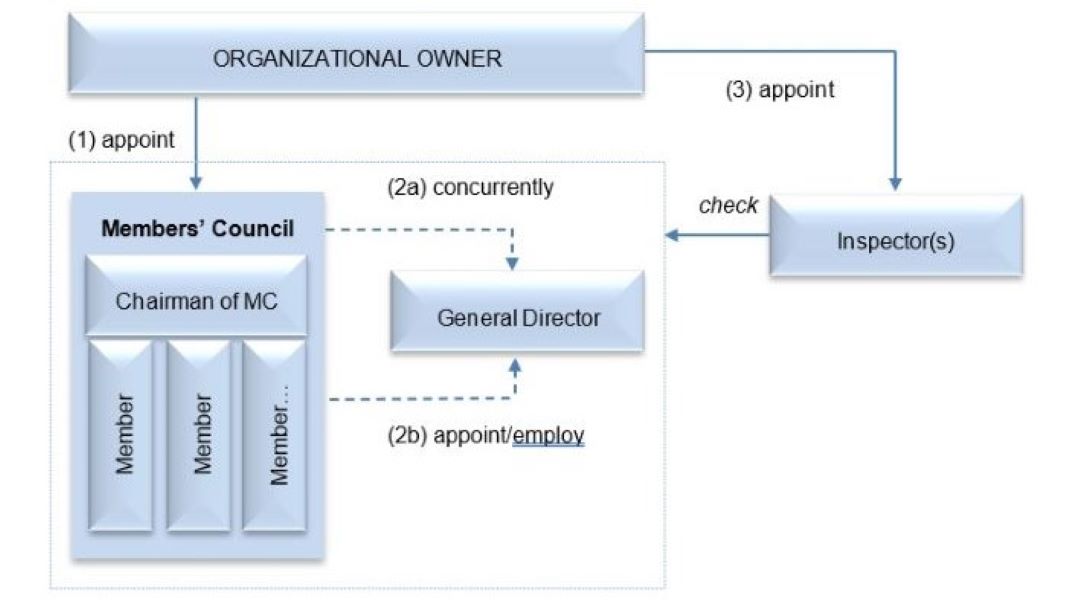
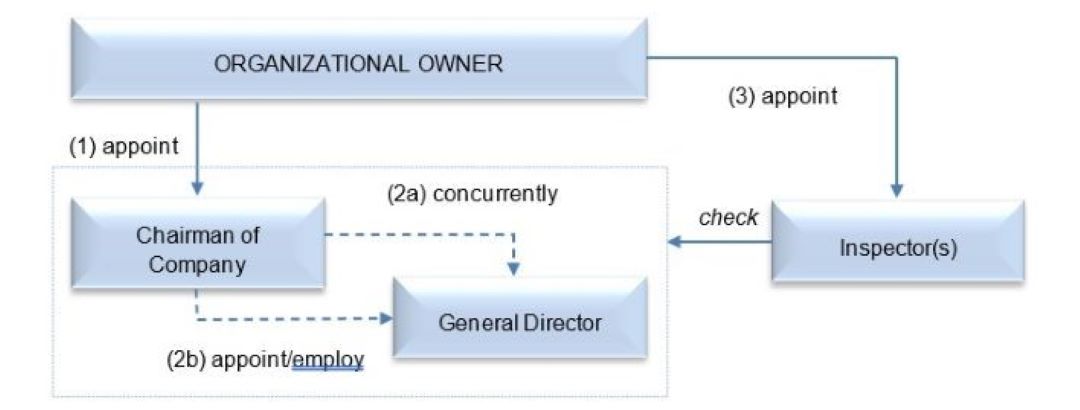
        Under LOE 2014[5], One Member LLC owned by an organization shall be organized, managed and operate in either of the following models:

        a. Chairman, General Director and Inspector(s)

        QNT LG One Member LLC

        b. Members’ Council, General Director and Inspector(s)

        QNT LG OM LLC

        2.2. Management structure of One Member LLC owned by an individual

        Under Law on Enterprise 2014[6], One Member LLC owned by an individual shall have a Chairman and a General Director. The Chairman may act concurrently or employ another person as the General Director.

        3. Contracts and transactions of One Member LLC with the related persons

        Under LOE 2014[7], any contract or transaction between One Member LLC owned by an organization and the following persons must be considered and decided by the Members’ Council or Chairman, Director/General Director and Inspector(s):

        1. Company Owner and Related Person[8] of Company Owner;
        2. A member of Members’ Council, Director/General Director and Inspectors;
        3. Related Person of the persons stipulated in point (ii) mentioned above;
        4. A manager of Company Owner, the person authorized to appoint such managers;
        5. A related person of the persons stipulated in sub-clause (d) of this clause.

        We are especially noted that:

        • The signatory of the contract must notify Members’ Council or Chairman, Director/General Director and Inspectors of entities involved in such contract or transaction; and concurrently enclose the draft of such contract or main contents of such transaction.
        • A contract or transaction shall be void and dealt with in accordance with law where it is not entered into in accordance with the relevant provisions, causing loss and damage to the company. The signatories to the contract and related persons being the parties to the contract must be jointly responsible for any loss arising and for returning to the company any benefit gained from the performance of such contract or transaction.
        • A contract or transaction between One Member LLC owned by an individual and Company Owner or Related Person of Company Owner must be recorded and retained as a separate file of the company.

        ________________________________________________

        [1] Article 75 of LOE 2014

        [2] Or a smaller percentage or value as stipulated in the company’s charter

        [3] Or a smaller percentage or value as stipulated in the company’s charter

        [4] Article 76 of LOE 2014

        [5] Article 78, 79, 80, 81 and 82 of LOE 2014

        [6] Article 85 of LOE 2014

        [7] Article 86 of LOE 2014

        [8] Related Person is defined in Clause 18 Article 4 of LOE 2014

        ________________________________________________

        @ Copyright 2015 – Công ty Luật QNT 

        Translate »